 FAMILY CONFERENCES 10/22 & 10/23!

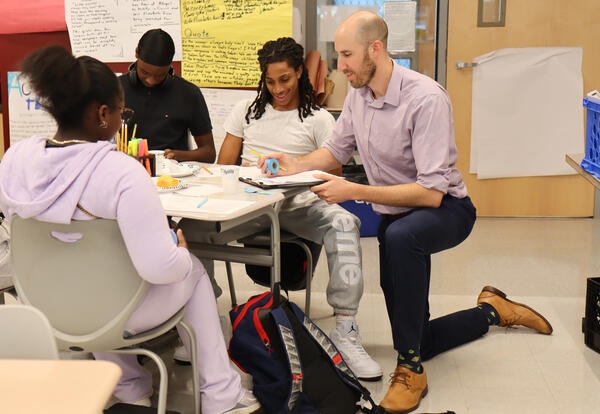
On Monday, students in Patrick Young and Thomas Rende's explored how the foods on a colonial dinner table revealed important historical insights about the society that produced them.
These foods included cornbread, apple cider, rabbit stew, salted cod and molasses cookies – some of which students had the opportunity to sample during the lesson.
"What I learned was where different foods came from and the reasons they were transferred to different places," shared junior Elyssa'Bleu McKenzie. "For example, apple cider transferred from England to New England since people wanted to transfer things from their homeland to where they lived."
By engaging with a variety of primary and secondary sources, maps, and the well-known play The Crucible by Arthur Miller, students took a close look at important topics such as relationships between English settlers and Indigenous Peoples, the movement of English traditions and crops to New England, gender roles in colonial New England and how trade routes connected people in New England, the Caribbean and Africa.
Students pondered how to answer difficult questions, such as, "If people indirectly contribute to or support an injustice, should they also be held responsible for it, even if they did not personally create it?"
Just as key characters in The Crucible grappled with how to respond to the injustice of the Salem witch trials, our Falcons were presented with their own challenge — analyzing both the positive and negative impacts of connections that happen between people groups and societies through migration, agriculture, fishing and trade.
American Experience is an interdisciplinary course that centers on the cooperative discovery of the history and literature of the United States. This is one of the many incredible courses available to our students here at Â鶹ӰÒô High!